
Executive Overview
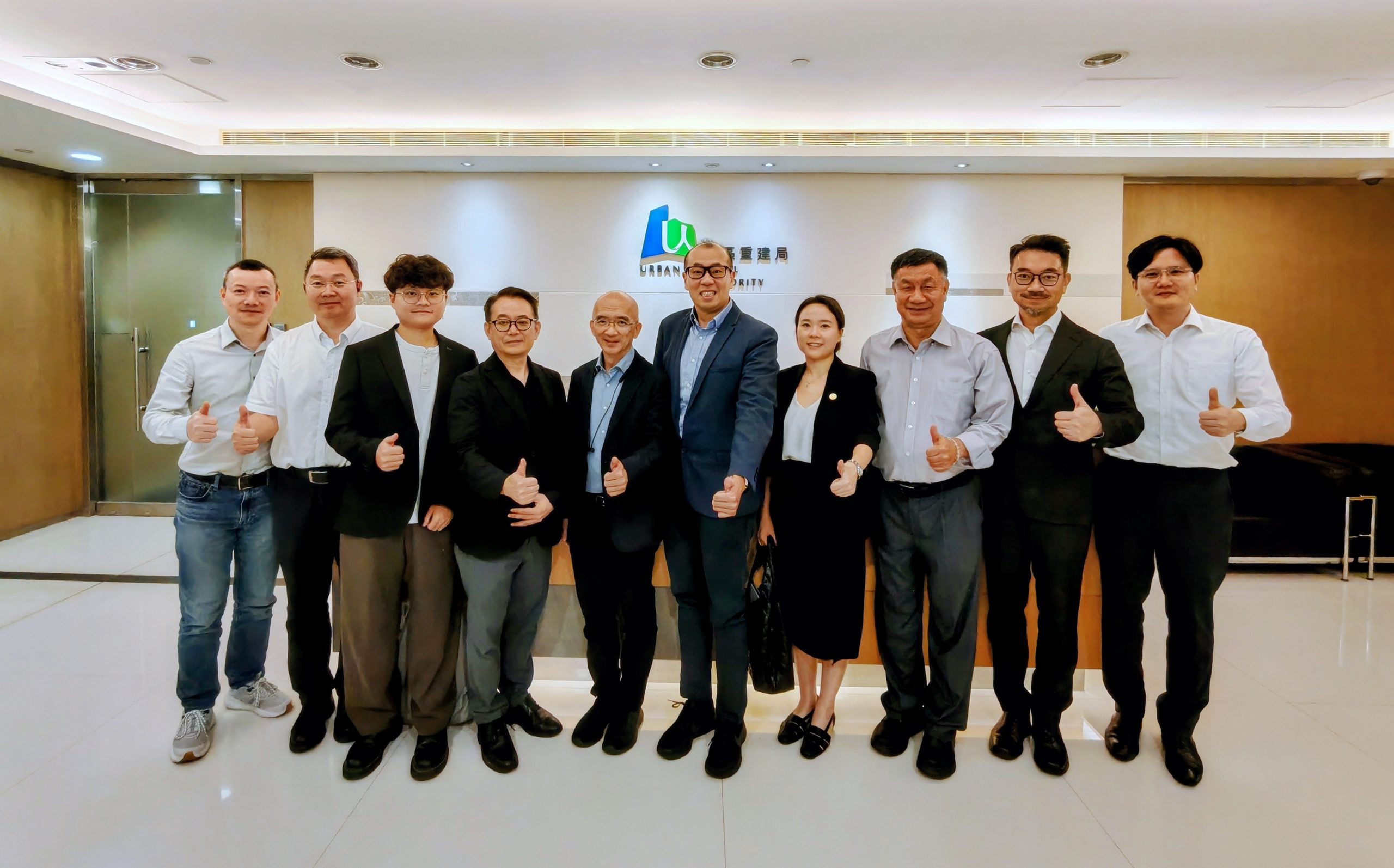
Representatives from The ESG Consortium (ESGC) and four awarded enterprises from the ESG Inclusion Award (ESGIA) 2026 cohort convened at the Urban Renewal Authority (URA) Headquarters for a closed-door technical exchange and reference session.
The session was designed as an exploratory, technical-level dialogue focused on the engineering realities of Hong Kong’s high-density built environment. Participating technology teams shared academic methodologies, verified data models, and practical case studies addressing key industry bottlenecks: building lifecycle data integration, Scope 3 embodied carbon reduction in temporary works, non-invasive HVAC energy efficiency, and predictive water resource governance.
ESGC organizes these dialogues to bridge the gap between emerging small and medium enterprise (SME) innovations and the rigorous engineering and compliance benchmarks required by statutory and institutional frameworks across Hong Kong.
Key Technical Reference Points Shared by Awarded Enterprises
During the 90-minute technical exchange, four awarded teams presented specialized engineering concepts structured to provide neutral technical reference for urban renewal and building rehabilitation considerations:


1. isBIM Limited — Lifecycle Data Integration & Construction Variance Control
- Focus Domain: Digital Twin & Building Information Modeling (BIM) Lifecycle Management.
- Technical Presentation: Discussed how parametric BIM models integrated with real-time site visual analytics (JARVIS Eagle Eye) can be used to audit construction workflows and material procurement.
- Industry Reference Value: Case data demonstrated how automated quantity surveying and clash detection can assist project teams in reducing redundant material orders, keeping project budget deviations within narrow operational bands, and supporting construction waste diversion targets.
2. Ho Wah Steel — Modular Reusable Steel & Embodied Carbon Accounting
- Focus Domain: Geotechnical Engineering, Excavation & Lateral Support (ELS), and Circular Economy.
- Technical Presentation: Shared technical specifications on standardized, reusable structural steel bracing systems incorporating digital QR/RFID lifecycle traceability for temporary foundation works.
- Industry Reference Value: Illustrated accounting frameworks for calculating Scope 3 embodied carbon savings—achieving up to 60% carbon reductions relative to single-use sacrificial steel. The methodology aligns with the BEAM Plus Materials Aspects (MA) circularity criteria for dense urban foundation works.
3. Shenzhen Huarui Zhongji Energy Saving — Algorithmic Chiller Plant Optimization
- Focus Domain: Existing Building Energy Efficiency & HVAC Engineering.
- Technical Presentation: Reviewed operational data models powered by 13 proprietary physics-mechanism algorithms that continuously calculate optimal chilled water flow, fan speeds, and compressor sequencing based on dynamic ambient load.
- Industry Reference Value: Highlighted the viability of achieving 15% to 30% operational energy reductions in legacy commercial and institutional plant rooms without requiring mechanical chiller replacements, offering a low-disruption reference model for building rehabilitation projects.
4. ECO Technologies LTD — High-Concurrency IoT Water Network Monitoring
- Focus Domain: Smart Water Telemetry & Subsurface Leak Detection.
- Technical Presentation: Presented the architectural framework of the WiiNoT platform, which combines acoustic loggers, pressure sensors, and machine-learning anomaly detection algorithms.
- Industry Reference Value: Shared engineering case studies on establishing a rolling “dynamic baseline” of water usage to differentiate normal peak usage from micro-fissures and concealed pipe seepage. The framework serves as a technical reference for mitigating non-revenue water loss and preventing structural dampness in aging utility risers.
Industry Dialogue Summary
The exchange provided an objective forum for dialogue between front-line innovators and seasoned urban renewal professionals:
- Understanding Statutory Realities: Participating innovators received constructive, ground-level feedback regarding site logistics, statutory safety standards, structural interface constraints, and the rigorous reliability thresholds demanded on public and quasi-public works sites.
- Promoting Pragmatic Sustainability: The discussions reinforced that scalable sustainability in high-density cities depends on low-disruption, commercially accessible technologies that ease maintenance overhead rather than adding unnecessary operational complexity.
ESGC extends its sincere appreciation to the project delivery, planning, and sustainability teams at the Urban Renewal Authority for their professional insights and constructive engagement.